
Pakistan's Defence Minister Khawaja Asif has indicated that further Iran-US negotiations are anticipated soon, following talks in Pakistan. Despite initial optimism, the previous round of negotiations did not result in a lasting peace agreement.
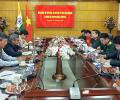
The 15th India-Vietnam Defence Dialogue signalled a move from routine talks to deeper cooperation, with new deals on submarine rescue and defence industry to support stability in the Indo-Pacific, notes Dr Rajaram Panda.

Pakistan has increased security measures in Islamabad and surrounding areas as the US and Iran prepare for another round of peace talks. The move follows an announcement by former US President Donald Trump that American negotiators would be in Pakistan for discussions aimed at resolving the conflict between the two nations.

Pakistan's Chief of Defence Forces Field Marshal Asim Munir held talks with Iranian leaders in Tehran to help resolve the conflict between the US and Iran, following a recent ceasefire agreement.

A Pakistani delegation, led by Army Chief Field Marshal Asim Munir, has arrived in Tehran to mediate the ongoing conflict between the US and Iran, following initial talks in Islamabad.

India and Russia have agreed to encourage joint manufacturing of military hardware and spare parts in India, aiming to improve maintenance of Russian-origin defence equipment and boost overall bilateral defence cooperation.

Andhra Pradesh is set to launch India's first indigenously built, open-access quantum computers, marking a significant step towards building a sovereign quantum hardware ecosystem. The initiative aims to position the state as a global hub for quantum technology and enable applications in various sectors.

India and the US have signed a framework agreement for defence cooperation for the next 10 years, enhancing their partnership and aiming for regional stability.

'It was diminishing even before Trump came to power.' 'The US was at the centre of the global economy. That position is going to become less and less important and less central.'
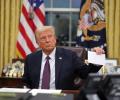
US President Donald Trump signed the National Defence Authorisation Act for Fiscal Year 2026 into law, highlighting broadened engagement with India and addressing the challenge posed by China in the Indo-Pacific region.

Iran has announced the Strait of Hormuz is open to commercial vessels, coinciding with a ceasefire between Lebanon and Israel.

Russia's First Deputy Prime Minister Denis Manturov met with Indian leaders to discuss strengthening bilateral ties in key sectors amidst the escalating conflict in West Asia.

Iranian news agencies have denied reports of Iranian officials travelling to Pakistan for negotiations with the United States, even as Pakistan prepares for potential talks and faces criticism from Israel.

External Affairs Minister S Jaishankar and US Secretary of State Marco Rubio discussed cooperation in trade, critical minerals, nuclear energy, and defence, reaffirming commitment to a free and open Indo-Pacific.

India's first trillion-dollar company will be built on technology it owns, not just operates, predicts Ajay Kumar.

Pakistan has announced its commitment to continue facilitating talks between the United States and Iran, urging both nations to uphold the ceasefire agreement. Deputy Prime Minister Ishaq Dar highlighted Pakistan's role in mediating recent discussions and expressed hope for durable peace and regional stability.

US Secretary of War Pete Hegseth on Wednesday claimed that Tehran "begged" for a truce, maintaining that Washington achieved a "decisive military victory" during 'Operation Epic Fury.'

Direct talks between the US and Iran, mediated by Pakistan, have failed to produce an agreement after 21 hours of negotiations, with disagreements over Iran's nuclear ambitions and sanctions proving insurmountable.

Trump emphasised that diplomatic discussions remain ongoing. At the same time, he issued a stark warning, saying that failure to reach an agreement could trigger military action.

Former Central Command chief David H Petraeus suggests the US and Iran are likely to extend their ceasefire beyond the initial two-week period, citing willingness from both sides to continue negotiations.

The intriguing bit is that Trump is likely to attend the talks in Islamabad this weekend -- if he does, it will be the clearest signal yet that the US is ready to exit the war with some sort of win to show, since he cannot afford to go for the talks and return empty-handed, notes Prem Panicker in his must read blog on the Iran War

Prime Minister Narendra Modi's visit to Israel aims to strengthen the strategic partnership between the two nations, focusing on cooperation in various sectors including defense, technology, and trade.

Pakistan declared an 'open war' with Afghanistan following airstrikes targeting Taliban fighters in response to alleged cross-border attacks. The situation has drawn international concern, with calls for de-escalation and diplomatic resolution.

Tensions between Washington, DC and Tehran have reached a boiling point, as a heavy barrage of aerial strikes was reported across multiple locations in Iran on Tuesday.

The threat has raised concerns about possible asymmetric attacks outside the region. Iran has also stepped up attacks on energy infrastructure in Gulf countries.

Former US President Donald Trump claimed victory over Iran, stating they agreed to never have a nuclear weapon and provided a 'significant prize' related to the Strait of Hormuz. He also suggested a change in Iranian leadership and acknowledged Pakistan's role in facilitating talks.

Trump has said he would be present at the signing ceremony in Islamabad. Don't be surprised if the Pakistani hosts make it a grand event in the geopolitics of the region. Trump would love that, notes Ambassador M K Bhadrakumar.

'We were in a heavily nuclearised environment. China had tested for Pakistan in the 1980s and helped their missile programme stay just one step behind us.'

Prime Minister Narendra Modi is scheduled to visit Israel for two days to discuss bilateral and regional issues, marking his second visit to the Jewish state and highlighting the growing strategic partnership between India and Israel.

The targeted eastern area is of immense strategic importance, as it is where the "majority of the country's oil resources are located."

High-level peace talks between the US and Iran, facilitated by Pakistan, aim to de-escalate the conflict in West Asia and potentially reshape regional stability.

As the negotiations continued, the Iranian government said on social media that "talks between Iran and the US in Islamabad entered the expert-level stage as economic, military, legal, and nuclear committees joined in".

The Indian government has dismissed the US Commission on International Religious Freedom's (USCIRF) report on religious freedom in India, stating that it does not recognise the commission's authority to comment on the rights of Indian citizens.

Delegations from the US and Iran have arrived in Islamabad for talks aimed at resolving the conflict between the two nations, following a ceasefire brokered by Pakistan. The negotiations are being closely watched due to their potential impact on regional security and global diplomacy.

India and Israel have elevated their relationship to a special strategic partnership, focusing on enhanced cooperation in trade, technology, and defense, while also addressing regional peace initiatives.

The National Investigation Agency (NIA) is investigating a US citizen and six Ukrainians for a terror conspiracy involving suspected links to ethnic rebel groups in India and Myanmar, including allegations of providing drone training.

Pakistan launched a retaliatory operation, 'Ghazab lil Haq,' against the Afghan Taliban following alleged border attacks, resulting in reported casualties and destruction of Taliban infrastructure.

India and France have elevated their relationship to a 'special global strategic partnership,' with increased cooperation in defense, trade, and technology. The leaders also inaugurated a helicopter assembly line in Karnataka.

The urgency for a resolution is underscored by the military situation, as joint operations by Israel and the US have consistently been "targeting Iran's missile systems, launch sites and other critical infrastructure" since the onset of the conflict.

'As result, Netanyahu 'convinced' Trump to go to war with the help of overoptimistic Israeli intelligence assessments, essentially explaining to him that they only need to bomb Iran for 3-4 days, and the regime would then collapse.' 'Rather unsurprisingly, Netanyahu is ever since blaming his own intel service for the entire operation failing.'
